



MEDICINSKE USLUGE
Medical services
Cardiology
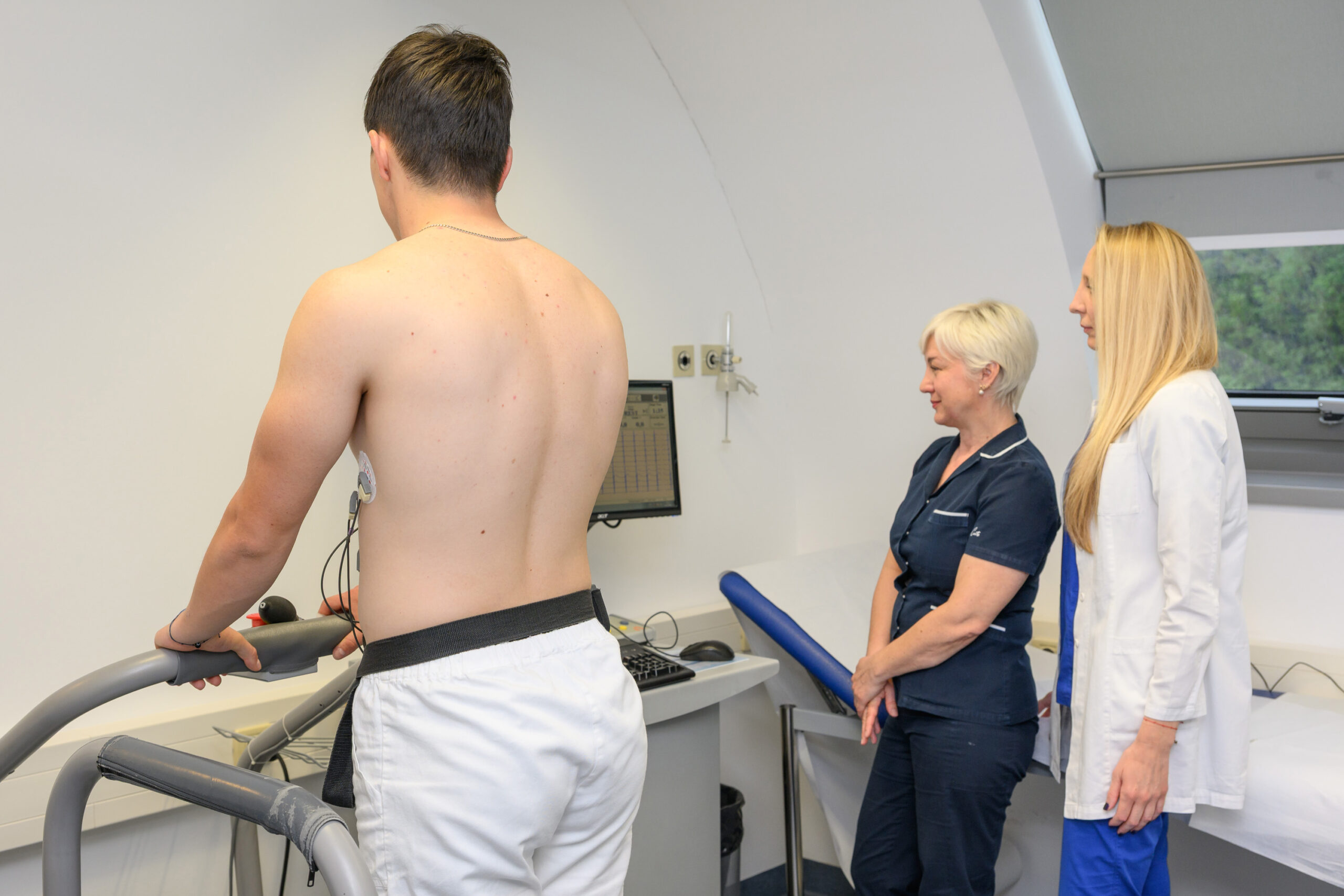

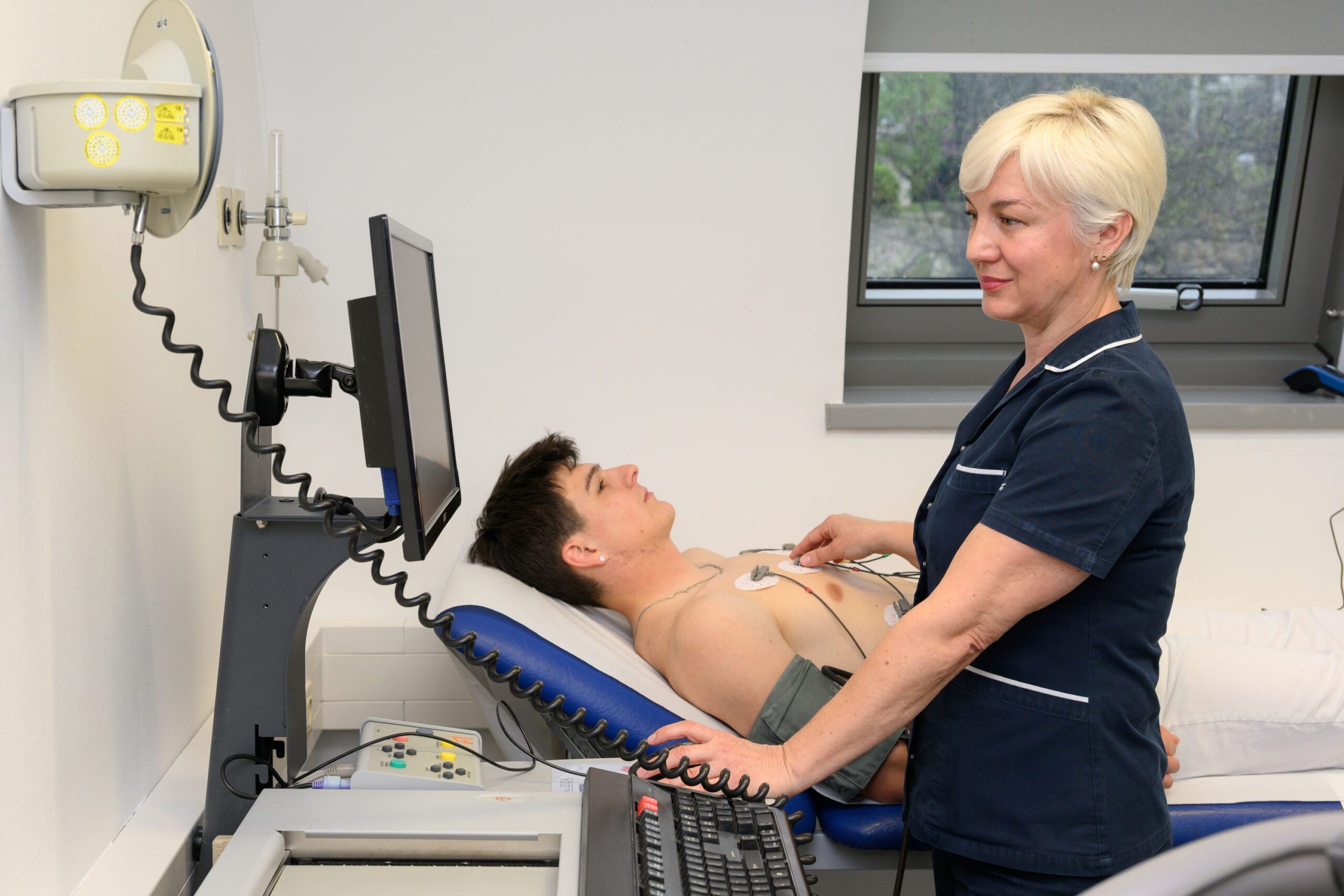
Cardiology specialists perform outpatient examinations and diagnostic procedures and provide consultative support to inpatient departments. Their services cover a wide range of cardiovascular and preoperative cardiac examinations.
Diagnostic procedures:
Electrocardiography (ECG)
ECG is a fast, simple and painless method that records the electrical impulses of the heart. It allows assessment of heart rhythm, conduction of impulses, heart rate and possible disorders.
Exercise stress test
The exercise stress test is used to evaluate heart function during physical exertion and reveals abnormalities that are not seen at rest. During the test, the patient walks on a treadmill while ECG and blood pressure are continuously monitored. The workload is gradually increased.
Preparation: The patient should wear comfortable sports clothing and shoes, bring water, and sign a consent form prior to the test. Any prescribed medication should be taken on the day of the examination. Men are advised to shave their chest area the evening before the test.
Echocardiography (heart ultrasound)
Echocardiography is one of the most widely used techniques in the diagnosis of heart disease, as it is non-invasive and painless, does not use X-rays and provides precise imaging. The patient lies on their left side, and the physician uses a probe to visualise the structure and function of the heart, including the heart valves, chambers and blood flow.
Holter ECG
A Holter ECG continuously records the electrical activity of the heart over a 24-hour period. Upon arrival, the patient first has an initial ECG recorded, after which Holter electrodes are placed on the chest and connected to the device. After the device is fitted, the patient carries out their normal daily activities, taking care that the device does not get wet, and keeps a symptom diary. The following day, the device is removed, and the recording is reviewed and forwarded to a specialist for interpretation.
Preparation: On the day of the examination, the patient should take any prescribed medication. Men are advised to shave their chest area the evening before the examination.
24-hour ambulatory blood pressure monitoring (ABPM)
ABPM is a diagnostic procedure that measures blood pressure over a 24-hour period, every 30 minutes during the day and every hour at night. A cuff is placed on the upper arm and connected to a device worn by the patient in a pouch. The patient carries out their normal daily activities and must avoid getting the device wet. Upon the completion of monitoring, the data are downloaded and analysed.