



MEDICINSKE USLUGE
Medical services
Paediatrics
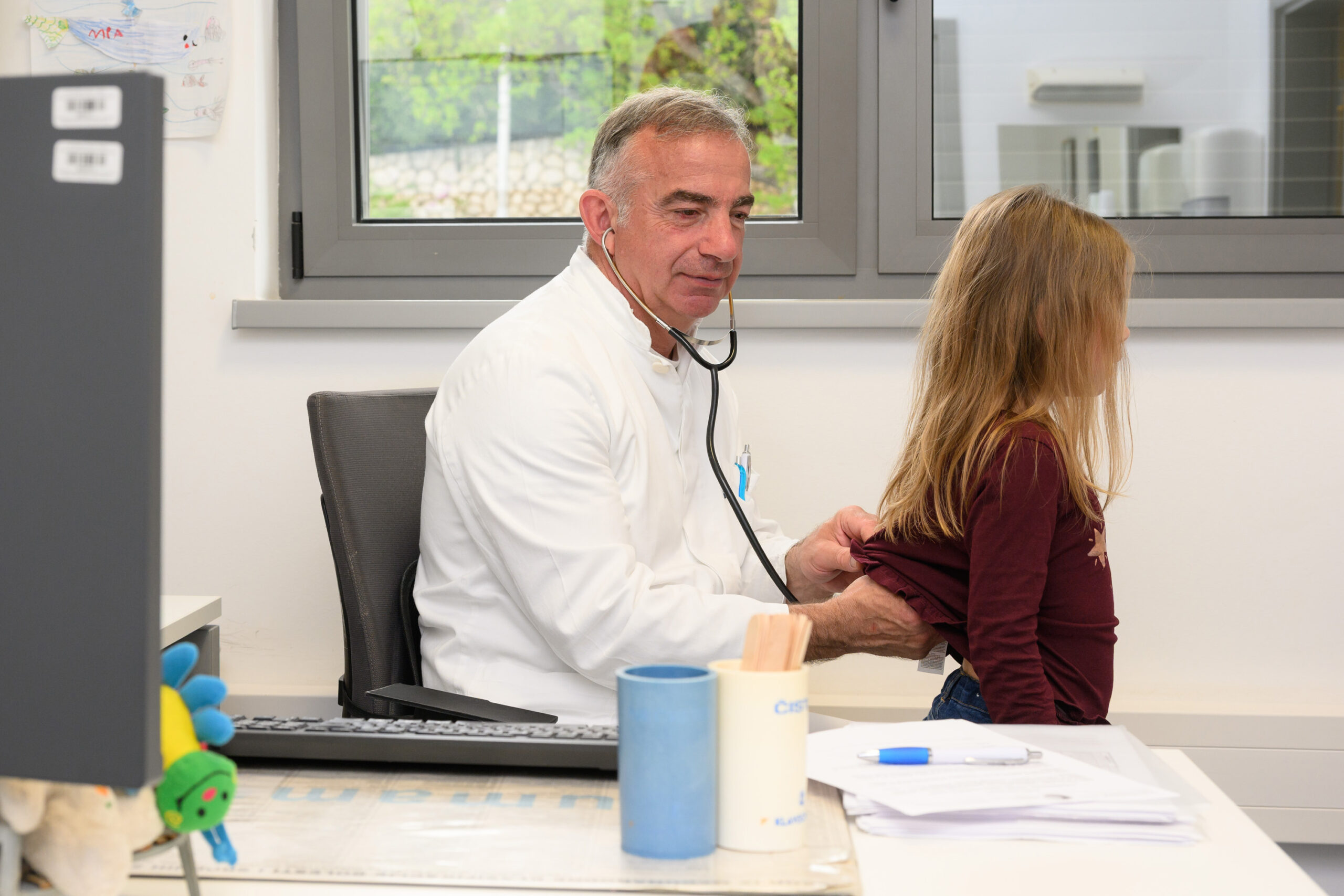


Since its foundation, Thalassotherapia Crikvenica has always dedicated special attention to the treatment and rehabilitation of children. The century-old tradition of thalassotherapy and the application of natural healing factors is today complemented by modern diagnostic equipment in the fields of pulmonology and allergies.
Alongside paediatric pulmonology as its core speciality, the institution is continuously developing other paediatric specialities in order to provide comprehensive healthcare and rehabilitation programmes for children up to 18 years of age.
In addition to specialist examinations and diagnostic procedures, respiratory rehabilitation includes inhalation therapy and respiratory physiotherapy. More information on indications is available HERE.
Paediatric cardiology services include specialist examinations and basic cardiac diagnostics such as ECG, echocardiography, exercise stress testing, and ECG and blood pressure Holter monitoring.
Indications:
- bronchial asthma
- COPD
- bronchiectasis
- chronic bronchitis (smoker’s, mucopurulent, deforming, simple)
- occupational lung diseases (e.g. pneumoconiosis)
- conditions after surgery of the chest, bronchi and lungs, and radiotherapy and chemotherapy.
Diagnostic procedures:
Note: In cases of acute illness, all diagnostic procedures listed below are postponed.
Spirometry / spirometry with pharmacodynamic (bronchodilator) test
Spirometry is a simple, painless and non-invasive diagnostic method used to measure lung function, including the volume and speed of air flow during inhalation and exhalation. It is a basic test for assessing lung capacity and diagnosing conditions such as asthma and COPD, and is most commonly used to detect obstructive and restrictive ventilatory disorders.
It is a basic examination in pulmonology that requires a high level of patient cooperation.
FeNO test
The FeNO test is a simple, non-invasive test used to measure the level of nitric oxide (NO) in exhaled air in order to assess airway inflammation. It is essential for diagnosing and monitoring allergic asthma, and assessing lung disease severity and the effectiveness of therapy.
You can read more about this diagnostic procedure here.
Allergy testing
After an examination and confirmation of indication, the patient is referred for allergy testing, informed about the procedure, and asked to sign a consent form. In children and individuals with reduced mental capacity, consent must be signed by a parent or legal guardian, who must also be present during the test.
A skin prick test is used for inhalant and food allergens. Testing is most often performed on the inner side of the forearm (or the upper thigh if necessary). The skin should not be treated with creams before the procedure. A nurse disinfects the skin, applies drops of allergen extract as prescribed by the physician, and marks the test sites. Each drop is gently pricked with a lancet and wiped off, after which the patient remains seated quietly for about 20 minutes until the reaction has been read. prick test, a testiraju se inhalacijski i nutritivni alergeni. Testiranje se najčešće provodi na unutarnjoj strani podlaktice (ili natkoljenici ako je potrebno). Prije postupka koža ne smije biti tretirana kremama. Medicinska sestra dezinficira kožu, nanosi kapljice alergenskih ekstrakata prema uputi liječnika i označava mjesta testiranja. Svaka se kapljica lagano utisne lancetom i obriše, a pacijent zatim mirno sjedi oko 20 minuta do očitanja reakcije.
During the period between application of the drops and reading of the results, the patient must not scratch their arm or rinse it with water. Itching commonly occurs, but it is necessary to wait until the results have been read, after which the patient returns to the specialist.
Contraindications and limitations
Allergy testing is not performed or is postponed in the following situations:
- acute illness
- use of antihistamines (it is advisable not to use antihistamines 7 days prior to testing)
- use of topical corticosteroids or immunomodulators (do not use for at least 7 days prior to testing)
- skin changes on the test site (inflammation, rash)
- The physician must be informed about:
- pregnancy
- previous severe allergic reactions (swelling of the lips or tongue, breathing difficulty, anaphylactic shock)
- chronic diseases (e.g. asthma, heart disease).